
Environmental statement
Environmental statement
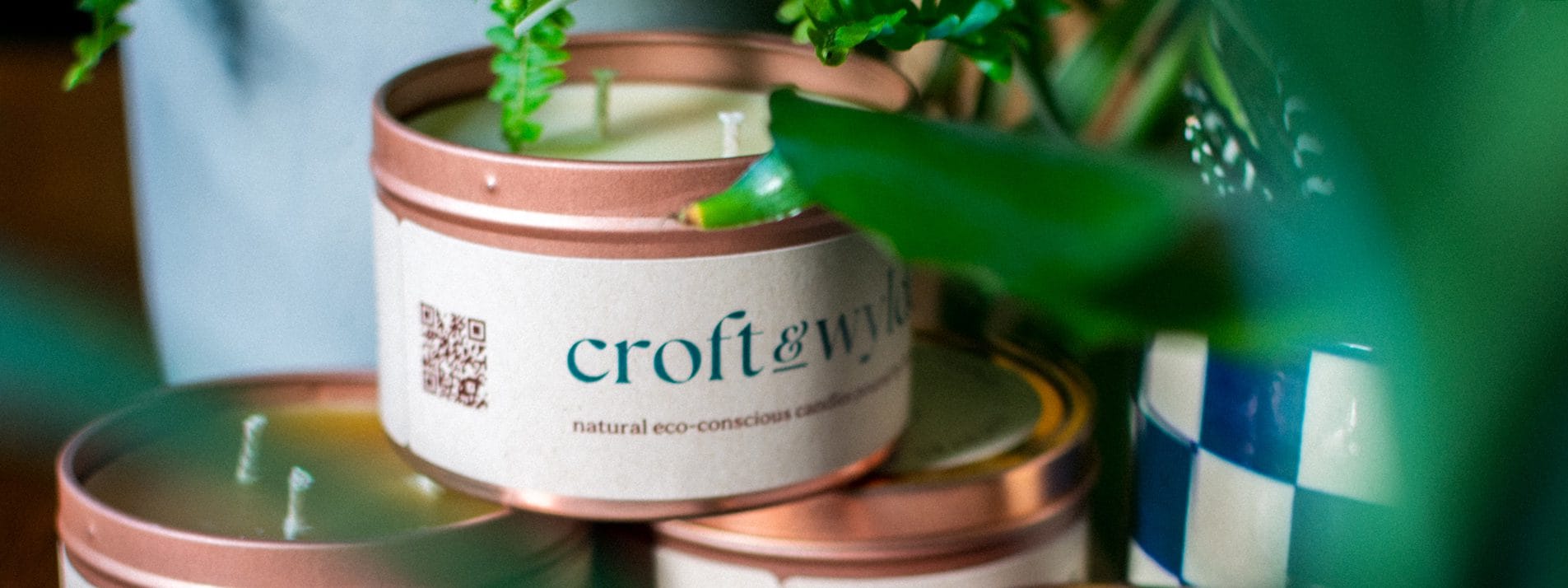
Croft & Wylde was born out of the desire to create a candle with a lower environmental impact, using local materials found close to home. Our candles are crafted from rapeseed wax grown in the UK and Europe, natural beeswax produced in the English countryside and aluminium tins made in the UK.
These materials were chosen after careful consideration of the available resources for candle-making, based on the assumed environmental impact of various materials throughout the life cycle of a finished candle. As a new small business, budget constraints mean that a full evidence-based life cycle assessment of our products is not yet possible, but this will be undertaken as a priority as soon as financially viable.
Our environmental statement intends to explain the choices we’ve made throughout the production process, based upon the available information, evidence and research.
This page is being updated on an ongoing basis. If you have any thoughts, questions or concerns, please get in touch.
‘Eco-conscious’, not ‘eco-friendly’
Burning candles is never good for the environment. Despite this, many candle brands use the term ‘eco-friendly’ in their marketing materials - often without a proper evaluation of the impact their choices have throughout the life cycle of their products.
The issue with the term ‘eco-friendly’ is the suggestion that a product has a net positive benefit on the planet, due to the positive associations of the word. If not using a particular product has a lower environmental impact than using the product would, then describing it as ‘eco-friendly’ can be misleading.
At Croft & Wydle, we describe our candle-making approach as ‘eco-conscious’. Instead of suggesting a positive impact, this term indicates an awareness and consideration of the negative effects our candles have on the environment, while making intentional choices to limit overall environmental impacts as much as possible.
Rapeseed wax as a locally-sourced choice
Many eco-minded candles on the market are made with soy wax, as it's thought to have a lower environmental impact compared to paraffin wax candles. However, the various environmental impacts of global soy agriculture have been well-documented.
As a whole, soy farming around the world has led to increased global deforestation and habitat conversion, particularly in threatened ecosystems like the Amazon rainforest. Many large-scale soybean producers also practice year-round cultivation, which can strain local ecologies due to soil degradation and chemical reliance.
Farming soy for oil production can require up to double the amount of water compared to growing rapeseed, and significantly more land is needed to produce the same amount of oil. The majority of soy is also grown in Asia and the Americas, which leads to high transport emissions when using soy wax for candle-making in the UK.
On the other hand, rapeseed is widely grown in the UK and Europe, which leads to fewer emissions associated with the final candle. Rapeseed crops are also generally used as a ‘break crop’ for wheats and cereals throughout the year, rather than being farmed on a constant basis. This reduces land-use pressure, and keeps local soils healthier.
Growing rapeseed is not without issues. Rapeseed crops require large amounts of nitrogen to thrive, which on average increases the use of fertilisers and pesticides during growing cycles. Where chemical or synthetic variants are used, run-off into the water table can harm local wildlife ecosystems. The carbon emissions associated with fertiliser production also contribute to the environmental impacts of rapeseed cultivation.
With these considerations in mind, we favour rapeseed wax over soy wax. Using rapeseed wax also helps us source materials as locally as possible. Although coconut wax could offer an alternative, transport emissions would remain high since coconuts cannot be grown locally.
Beeswax and ethical sourcing
There is competing information available on the environmental impacts of beekeeping. Healthy, low intensity hives can benefit the local ecosystem by providing vital pollinators and maintaining biodiversity. However, high intensity or mass production operations strain hive health and local wildlife systems.
Using beeswax in candle-making can reduce the carbon footprint of the finished candle, as beeswax can be sourced at a hyper-local level in the UK. Choosing producers who practice ethical beekeeping and prioritise hive health and minimal intervention ensures our production process keeps the environment in mind.
Croft & Wylde candles use natural beeswax produced in the English countryside, sourced from beekeepers with a focus on ethical beekeeping and sustainability.
Container material selection
A choice between metal, glass or ceramic containers each come with their own set of environmental implications throughout the life cycle of a candle.
Glass or metal containers have the greatest recycling potential, as both are widely recycled in the UK. However, it's not currently possible to source recycled glass jars from within the UK - to use glass containers made from recycled materials, they must be imported from mainland Europe.
Aluminium is widely known to have great recycling potential - processing it uses as little as 5% of the energy it would take to produce virgin aluminium, and it has high durability for re-use. Aluminium containers are also significantly lighter than glass, meaning transport emissions are much lower.
However, on a per-weight basis, the production of aluminium is much more carbon intensive than glass. Raw bauxite mining in tropical regions has also led to deforestation, biodiversity loss and soil erosion over the years. As such, there are many variables - such as container re-use and recycling efficiencies - that can influence the overall environmental impact. Using containers produced with high amounts of post-consumer recycled material is likely to reduce the overall impact of aluminium containers compared to glass.
We use aluminium containers produced in the UK, which means fewer miles from factory to studio. More research in the context of a specific life cycle assessment of our products is needed to ensure we keep our impact as low as possible.
Wicks, packaging and accessories
Our rapeseed wax candles use cotton and linen flat wicks, which have a relatively clean burn. Our pure beeswax container candles use cotton flat-braided wicks with paper filaments. We source the wicks from manufacturers who coat them with a thin layer of paraffin wax - so a future improvement is to find alternative manufacturers who don't use paraffin coatings, or to explore in-house wick production.
We also use adhesive pads to hold the wick bases to containers. These use synthetic, non-biodegradable materials. A next step is to explore alternative methods, such as looking into the potential of using glue dots with natural, non-chemical glues.
Our labels are made from 100% recycled kraft paper, uncoated for a natural effect and to reduce environmental impact. The labels can be left on the containers without reducing recycling potential, and the adhesive is made from water-based, solvent free emulsion.
We use container inserts and coasters made from seed paper - this biodegradable, compostable paper is made from a mixture of recycled pulp and wildflower seeds. It means the paper can be planted in soil to grow wildflowers, or simply put in the compost bin.
All our packaging is made from recycled kraft cardboard, and we use shredded kraft paper for internal packing material. This ensures no virgin materials are used in our packaging.
Further reading
- Comparative life cycle assessment of five different vegetable oils (2014)
- Comprehensive Review of Life Cycle Carbon Footprint in Edible Vegetable Oils (2025)
- Carbon Footprint of Honey in Different Beekeeping Systems (2021)
- Beekeeping as a Tool for Sustainable Rural Development (2024)
- Life Cycle Assessment (LCA) and Eco-Profile of Plastic, Glass, and Aluminium Bottles (2020)
- Review on metal packaging: materials, forms, food applications, safety and recyclability (2019)
- Sustainability aspects of Bauxite and Aluminium (2021)